

If you live in Columbia or Dutchess County, Lyme disease is not an abstract risk — it is a year-round reality. New York State consistently reports some of the highest rates of human Lyme disease cases in the country, and dogs face the same tick exposure their owners do, often with far more frequent contact with tick habitat. Understanding how Lyme disease affects dogs, how to prevent it, and when to seek veterinary care can make a significant difference in your pet’s long-term health.
How Dogs Get Lyme Disease
Lyme disease is caused by the bacterium Borrelia burgdorferi, transmitted through the bite of infected black-legged ticks (Ixodes scapularis), commonly called deer ticks. In the Hudson Valley, deer ticks are abundant in wooded areas, tall grass, leaf litter, and even maintained yards near wooded borders — which describes most rural and suburban Columbia County properties.
A tick generally needs to be attached for 36 to 48 hours to transmit Borrelia burgdorferi, which is why daily tick checks and prompt removal are a meaningful preventive measure even when prevention products are in use. According to the Centers for Disease Control and Prevention, the northeastern United States — including New York’s Hudson Valley — is one of the highest-risk regions in the country for Lyme disease.
Signs of Lyme Disease in Dogs
The most commonly recognized sign of Lyme disease in dogs is sudden-onset lameness — often shifting from leg to leg — accompanied by joint swelling and pain, fever, lethargy, and reduced appetite. Many dogs with Lyme disease simply seem “off”: less energetic than usual, reluctant to play, stiff when getting up.
What makes Lyme disease particularly tricky is that many infected dogs show no signs at all, or show subtle signs that owners attribute to other causes. Regular annual or semi-annual screening is important for dogs in endemic areas because the infection can cause kidney damage — known as Lyme nephritis — that progresses silently until it is advanced.
Lyme Nephritis: The Serious Complication
Most dogs with Lyme disease recover fully with antibiotic treatment. However, a subset of infected dogs — particularly certain breeds including Labrador Retrievers and Golden Retrievers — develop Lyme nephritis, a protein-losing kidney disease triggered by immune complex deposition. Lyme nephritis can be fatal and is difficult to treat once established.
This is one of the primary reasons we recommend Lyme screening as part of annual preventive care for dogs in the Hudson Valley, not just evaluation of symptomatic dogs. Early detection of protein loss in the urine can identify at-risk dogs before kidney function is significantly compromised.
Prevention: The Best Treatment Is Not Getting It
A comprehensive Lyme disease prevention strategy for Hudson Valley dogs includes:
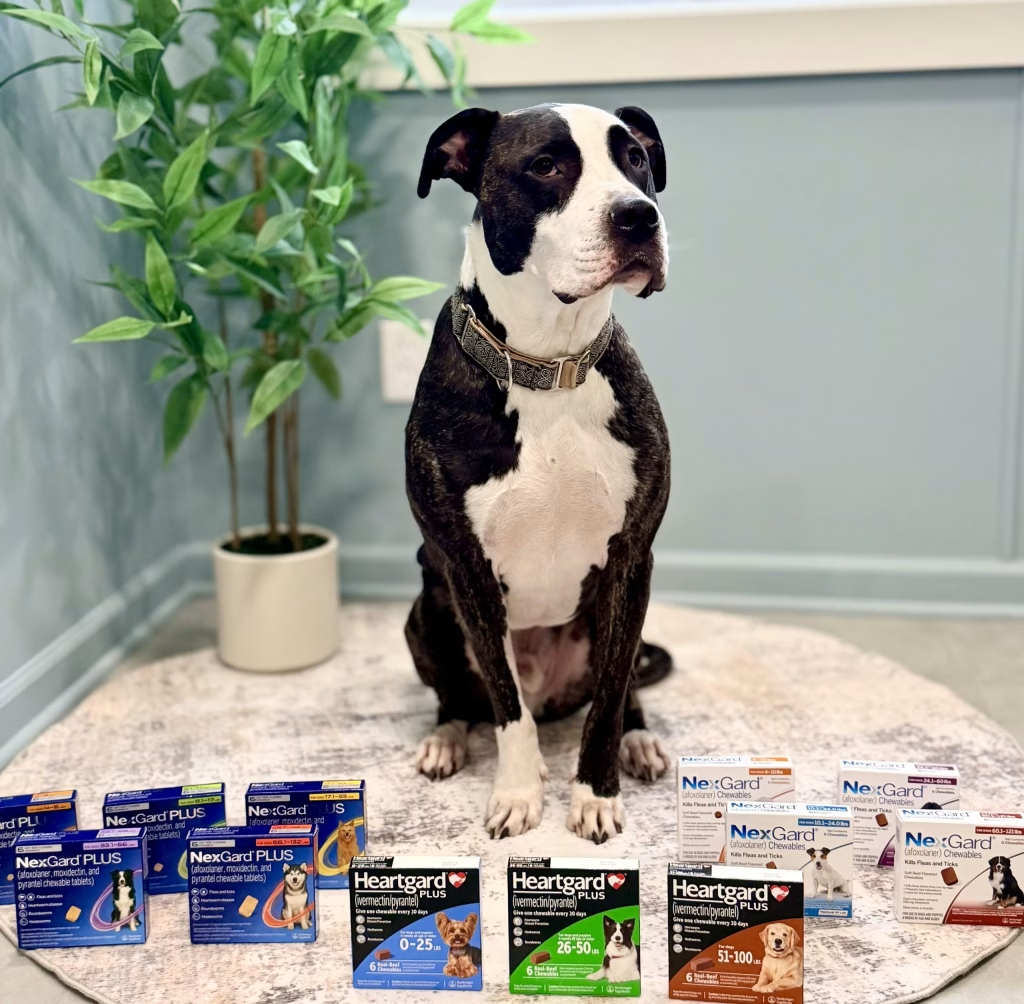
Veterinarian-prescribed tick prevention products. Year-round use of an effective tick preventive significantly reduces the risk of tick attachment and transmission. Many products begin killing ticks within hours of attachment — well before the 36 to 48 hour transmission window. Options include oral chewables and topical products; your veterinarian can help you choose the best fit for your dog’s lifestyle and health status.
Lyme vaccination. The Lyme vaccine is highly effective and strongly recommended for dogs in endemic areas. It works by targeting Borrelia burgdorferi within the tick gut before transmission occurs. Vaccination does not replace tick prevention — it complements it.
Daily tick checks. Particularly after time in wooded areas or tall grass, running your hands through your dog’s coat — paying particular attention to the ears, collar area, armpits, groin, and between toes — allows you to find and remove ticks before transmission can occur.
Prompt tick removal. Use fine-tipped tweezers or a tick removal tool to grasp the tick as close to the skin as possible and pull straight upward with steady pressure. Do not twist, burn, or apply substances to the tick. The American Veterinary Medical Association has detailed guidance on safe tick removal techniques.
Annual screening. The 4Dx or similar combination test, run annually alongside heartworm testing, screens for Lyme disease, Anaplasmosis, Ehrlichia, and heartworm simultaneously. For dogs in high-risk areas like Columbia County, this annual screen is a cornerstone of preventive care.
Other Tick-Borne Diseases to Know About
Lyme disease is the most prevalent tick-borne illness in the Hudson Valley, but it is not the only one. Anaplasmosis — caused by Anaplasma phagocytophilum and also transmitted by deer ticks — is increasingly common in our region and causes signs similar to Lyme disease, including fever, lethargy, and joint pain. Ehrlichiosis and Rocky Mountain Spotted Fever are also present, though less common locally.
The good news: a quality year-round tick prevention product, combined with annual screening, provides meaningful protection against all of these diseases simultaneously.
When to Call Your Veterinarian
Call us if your dog is showing sudden lameness, seems painful, is running a fever, or has been less active than usual — especially following a known tick exposure. Don’t wait to see if it resolves on its own. Lyme disease responds well to antibiotic treatment when caught early; delayed treatment increases the risk of complications.
Copake Veterinary Hospital provides Lyme vaccination, tick prevention products, and annual 4Dx screening for dogs in Copake Falls, NY and throughout Columbia and Dutchess counties. Call us at (518) 329-6161 to schedule a preventive care appointment or discuss the right tick prevention protocol for your dog.