

Dental Disease in Dogs and Cats in Copake Falls, NY
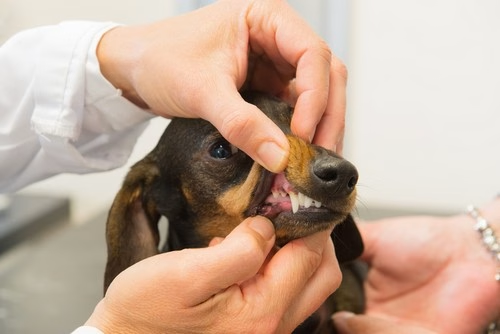
Dental disease is the most common health condition diagnosed in adult dogs and cats — and one of the most consequential. At Copake Veterinary Hospital, professional dental care is performed under full anesthesia with complete dental radiography and the same level of thoroughness we apply to all of our medical services.
request an appointmentHow Dental Disease Develops and Why It Matters
Plaque forms on tooth surfaces within hours of eating. Without regular removal, it mineralizes into tartar within days. Tartar accumulates above and below the gumline, creating a reservoir of bacteria that triggers progressive inflammation — gingivitis first, then periodontitis as bone and supporting structures are destroyed.
By age 3, most cats and dogs have some degree of dental disease. By age 5 or 6, many have significant disease. And because pets mask pain instinctively, most are living with dental discomfort that owners don’t recognize — simply adapting their behavior to accommodate what hurts.
Why it matters beyond the mouth: The chronic bacterial load of periodontal disease enters the bloodstream through inflamed gum tissue. Research has associated severe dental disease with damage to the heart, kidneys, and liver. The systemic consequences of untreated dental disease are clinically significant and become increasingly relevant as other organ systems age alongside the mouth.
Signs of Dental Disease in Pets
- Bad breath — persistent odor beyond normal
- Yellow, brown, or gray discoloration on tooth surfaces
- Red, swollen, or bleeding gums
- Reluctance to chew hard toys or treats previously enjoyed
- Chewing on one side of the mouth
- Dropping food while eating
- Pawing at the face or mouth
- Drooling more than usual
- Reduced appetite or weight loss
The absence of these signs does not indicate a healthy mouth. Many pets with moderate to severe dental disease show no symptoms owners can identify.
Our Dental Care Approach
Professional dental cleaning at Copake Veterinary Hospital is performed under general anesthesia with continuous monitoring. This allows us to do the procedure properly — safely, completely, and without causing unnecessary stress to the patient. Our dental protocol includes:
- Full-mouth dental radiography — The majority of each tooth structure is below the gumline. Dental X-rays reveal bone loss, root abscesses, tooth resorption lesions, retained roots, and other pathology that cannot be detected visually. Many extractions would be missed without them.
- Oral examination with periodontal probing — Each tooth is evaluated at six sites to measure pocket depth and attachment loss
- Scaling above and below the gumline — Removal of plaque and tartar using ultrasonic and hand instruments
- Polishing — Smoothing tooth surfaces to slow plaque reattachment
- Extractions as indicated — Non-salvageable teeth are extracted with post-extraction radiographic confirmation
- Multi-modal pain management — Local nerve blocks, systemic analgesics, and post-operative pain medication
At-Home Dental Care Between Professional Cleanings
Daily toothbrushing with pet-safe toothpaste is the most effective at-home strategy. Dental chews, water additives, and prescription dental diets with a Veterinary Oral Health Council (VOHC) seal of approval provide documented efficacy and can significantly extend the interval between professional cleanings.
Our dental care services page has full details on our protocols and offerings. Our wellness exams include dental assessment at every visit. For pets whose dental disease is contributing to chronic pain, our pain management services address discomfort while the underlying problem is treated. And our in-house laboratory allows pre-anesthetic bloodwork the morning of a dental procedure.
Contact Copake Veterinary Hospital at (518) 329-6161 to schedule a dental evaluation for your dog or cat in Copake Falls, NY .
Frequently Asked Questions About Dental Disease in Dogs and Cats
Does my pet really need to be under anesthesia for a dental cleaning?
Yes — a proper dental cleaning is impossible to perform safely and effectively in an awake animal. Anesthesia allows full-mouth radiography, subgingival scaling (below the gumline, where the significant pathology is), probing of every tooth, and any necessary extractions — all without causing distress or injury to the patient. “Anesthesia-free” dental procedures clean only the visible crown surfaces and leave subgingival disease completely untreated.
How do I know when my pet needs a dental cleaning?
Annual dental assessment during your pet’s wellness exam gives us an objective picture of where things stand. We’ll recommend a cleaning based on the degree of tartar accumulation, gingival inflammation, and pocket depths — not just how the teeth look from the outside.
Is dental disease in cats different from dental disease in dogs?
Yes — cats are uniquely susceptible to tooth resorption lesions (formerly called feline odontoclastic resorptive lesions or FORLs), in which the tooth structure is progressively destroyed from within. These lesions are extremely painful and are only detectable with dental radiography. They are one of the primary reasons full-mouth X-rays are essential at every feline dental procedure.
My pet just had a dental cleaning last year — does he need another one?
Frequency of professional dental cleanings is individualized. Some pets — particularly small breeds and cats — may benefit from annual cleanings. Others with excellent home care and slower plaque accumulation may go longer. We assess the current state of the mouth at each wellness exam and recommend a cleaning when the clinical findings warrant it.
Will my pet need extractions?
This depends on the state of the teeth found under anesthesia with dental radiography. We do not know the full picture until the mouth is examined and X-rayed under anesthesia. We discuss likely findings based on the pre-anesthetic exam and will contact you during the procedure if extractions beyond those discussed are needed.
Is dental care safe for my older pet?
With appropriate pre-anesthetic bloodwork, careful anesthetic protocols, and continuous monitoring, dental procedures can be safely performed in most senior pets. The risk of unmanaged dental disease — chronic infection, systemic inflammation, and pain — typically outweighs the anesthetic risk in a properly screened patient. We evaluate every patient individually.
How do I schedule a dental cleaning at Copake Veterinary Hospital?
Call Copake Veterinary Hospital at (518) 329-6161 to schedule. We’ll perform a pre-anesthetic exam and bloodwork before the procedure and walk you through what to expect on the day of your pet’s dental appointment.