

Dental disease is the most common health condition diagnosed in adult dogs and cats. According to the American Veterinary Medical Association, most cats and dogs show signs of dental disease by age three. Yet it remains one of the most underappreciated health problems in companion animals — partly because it’s easy to miss, and partly because its consequences extend far beyond the mouth.
How Dental Disease Develops
It starts with plaque — a film of bacteria that forms on tooth surfaces within hours of eating. When plaque isn’t removed by brushing or chewing, it mineralizes into tartar (calculus) within days. Tartar builds up above and below the gumline, creating an environment where bacteria thrive.
As bacteria accumulate below the gumline, the body mounts an inflammatory response. The result is gingivitis — redness, swelling, and bleeding of the gums. If left untreated, gingivitis progresses to periodontitis: destruction of the bone and supporting structures that hold teeth in place. Teeth become loose, painful, and eventually lost. Bone loss can be severe.
This process is largely invisible. Pets rarely show obvious signs of dental pain until the disease is advanced — they continue eating, playing, and behaving normally while silently experiencing significant discomfort. By the time an owner notices a problem, the disease has often been present and progressing for years.
Dental Disease Isn’t Just a Mouth Problem
The bacteria in a diseased mouth don’t stay there. Periodontal disease creates a chronic source of bacterial infection that can enter the bloodstream through inflamed gum tissue. Research has established associations between severe dental disease and damage to the heart, kidneys, and liver in both dogs and cats.
Endocarditis — bacterial infection of the heart valves — has been linked to oral bacteria. Chronic kidney disease in cats may be worsened by recurring bacteremia from periodontal disease. The systemic effects of untreated dental disease are real and can meaningfully shorten a pet’s healthy lifespan.
Signs That Your Pet May Have Dental Disease
Because pets mask pain well, many owners are caught off guard when their veterinarian finds significant dental disease during a routine wellness exam. Some signs to watch for at home:
- Bad breath — persistent, unpleasant odor that goes beyond normal “dog breath”
- Yellow, brown, or gray discoloration on the teeth
- Red, swollen, or bleeding gums
- Drooling more than usual
- Chewing on one side of the mouth
- Dropping food while eating
- Reluctance to chew hard toys or treats that the pet previously enjoyed
- Pawing at the face or mouth
- Changes in appetite or weight loss
The absence of these signs does not mean dental disease is absent. Many pets with significant periodontal disease show none of these symptoms. Annual veterinary dental assessment is necessary to detect what owners cannot see.
What a Professional Dental Cleaning Actually Involves
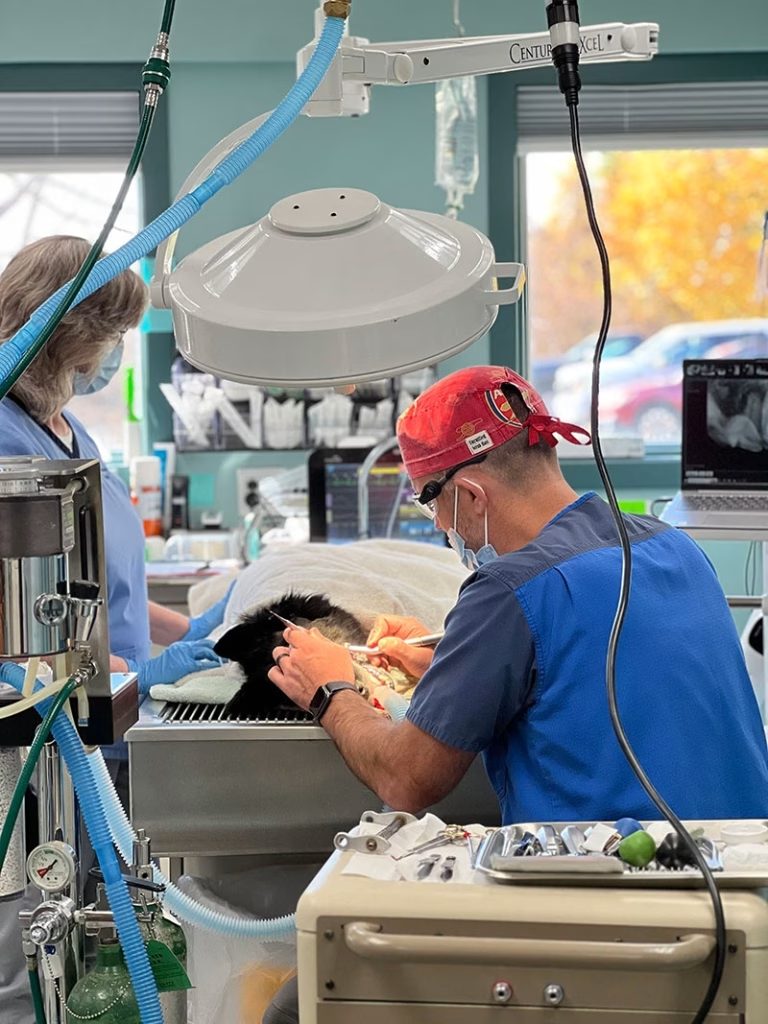
A veterinary dental cleaning — done properly — is not the same as a groomer’s “teeth brushing.” Professional dental cleaning under veterinary standards requires general anesthesia. There is no safe, effective way to perform a thorough dental evaluation and cleaning in an awake animal.
Under anesthesia, a dental cleaning at a properly equipped practice includes:
- Full-mouth dental radiography — The majority of each tooth is below the gumline and invisible to visual examination. Dental X-rays reveal bone loss, root abscesses, retained roots, and tooth resorption lesions that cannot be detected any other way. Many dental problems requiring extraction would be completely missed without them.
- Oral examination and probing — Each tooth is probed at six points to measure pocket depth and identify attachment loss.
- Scaling — Removal of plaque and tartar above and below the gumline using ultrasonic and hand instruments.
- Polishing — Smoothing of tooth surfaces to slow the re-attachment of plaque.
- Extractions as needed — Teeth that are non-salvageable due to fracture, advanced periodontal disease, or resorption are extracted. Post-extraction radiographs confirm complete root removal.
The 2023 AAHA Dental Care Guidelines for Dogs and Cats strongly recommend full-mouth radiography at every professional dental cleaning and oppose anesthesia-free dental procedures, which cannot safely or effectively address subgingival disease.
Anesthesia-Free Dental Cleaning: Why It’s Not Equivalent
“Anesthesia-free” dental cleaning — offered at some groomers and pet stores — removes visible tartar from the crowns of teeth. It cannot address subgingival (below the gumline) disease, which is where the significant pathology occurs. It creates a cosmetic improvement while leaving the actual disease untreated. It also carries its own risks, as attempting dental procedures on a conscious, unsedated animal causes stress and can result in injury.
Veterinary dental specialists and organizations including AAHA and the American Veterinary Dental College uniformly do not recommend anesthesia-free dental procedures as a substitute for proper professional dental care.
At-Home Dental Care
Daily toothbrushing is the most effective at-home strategy for slowing plaque accumulation between professional cleanings. Pet-specific toothpaste (never human toothpaste, which contains xylitol or fluoride — both toxic to pets) and a soft-bristled brush or finger brush are all that’s needed. Start slowly with young pets to build a positive association.
The Veterinary Oral Health Council (VOHC) maintains a list of products that have earned their seal of approval based on demonstrated evidence of efficacy — a useful resource when evaluating dental chews, water additives, and other at-home dental products.
At-home care significantly extends the interval between professional cleanings — but it does not eliminate the need for them.
How Often Does My Pet Need a Professional Dental Cleaning?
This varies considerably based on the individual patient. Breed, tooth alignment, home care habits, and disease history all influence how quickly plaque accumulates and disease progresses. Some pets — particularly small breed dogs and many cats — may benefit from annual professional cleanings. Others may go longer between cleanings with diligent home care.
At Copake Veterinary Hospital, dental assessment is part of every wellness exam. We’ll give you an honest assessment of where your pet’s dental health stands and what timeline makes sense for their specific situation. Learn more about our dental care services or call us at (518) 329-6161 to schedule an appointment in Copake Falls, NY.