


Heartworm Disease in Dogs in Copake Falls, NY
Heartworm disease is a serious, potentially fatal condition that is entirely preventable. At Copake Veterinary Hospital, annual heartworm testing and consistent year-round prevention are cornerstones of our preventive care protocol for every dog in the Hudson Valley — because heartworm is present in our region and the cost of prevention is a fraction of the cost of treatment.
request an appointmentHow Heartworm Disease Works
Heartworm disease is caused by Dirofilaria immitis, a parasitic worm transmitted through the bite of infected mosquitoes. When an infected mosquito bites a dog, it deposits microscopic larvae (microfilariae) into the skin. Over 6 months, these larvae mature and migrate to the heart and pulmonary arteries, where adult worms grow up to 12 inches in length and live for 5–7 years.
Adult worms cause progressive damage to the heart, lung tissue, and blood vessels. The burden of worms in severe cases can number in the hundreds. The disease progresses through stages — from early infection with no symptoms to advanced disease with heart failure and respiratory compromise.
Why the Hudson Valley Has Meaningful Heartworm Risk
Heartworm was historically considered a disease of the Gulf Coast and southeastern United States — but its geographic range has expanded significantly. Mosquitoes are the vector, and warmer, wetter seasons create conditions for transmission throughout New York State and the broader Northeast. Columbia County dogs are at risk, and the American Heartworm Society recommends year-round prevention for all dogs in the continental United States.
Signs of Heartworm Disease in Dogs
Early infection often produces no clinical signs. As the worm burden grows and disease progresses, dogs may show:
- Mild persistent cough
- Exercise intolerance — tiring quickly on walks or during play
- Reluctance to exercise
- Weight loss and reduced appetite
- Swollen abdomen (from fluid accumulation in advanced disease)
- Fainting or collapse (in severe cases)
Caval syndrome — a severe, acute presentation in which a massive worm burden obstructs blood flow — requires emergency surgical intervention and is often fatal.
Diagnosis, Prevention, and Treatment
Diagnosis: Annual heartworm testing — typically combined with tick-borne disease screening on a single 4Dx test from our in-house laboratory — detects heartworm antigen (proteins from adult female worms) in the bloodstream. Testing before starting prevention is essential; giving prevention to a dog with an active heartworm infection can cause serious reactions.
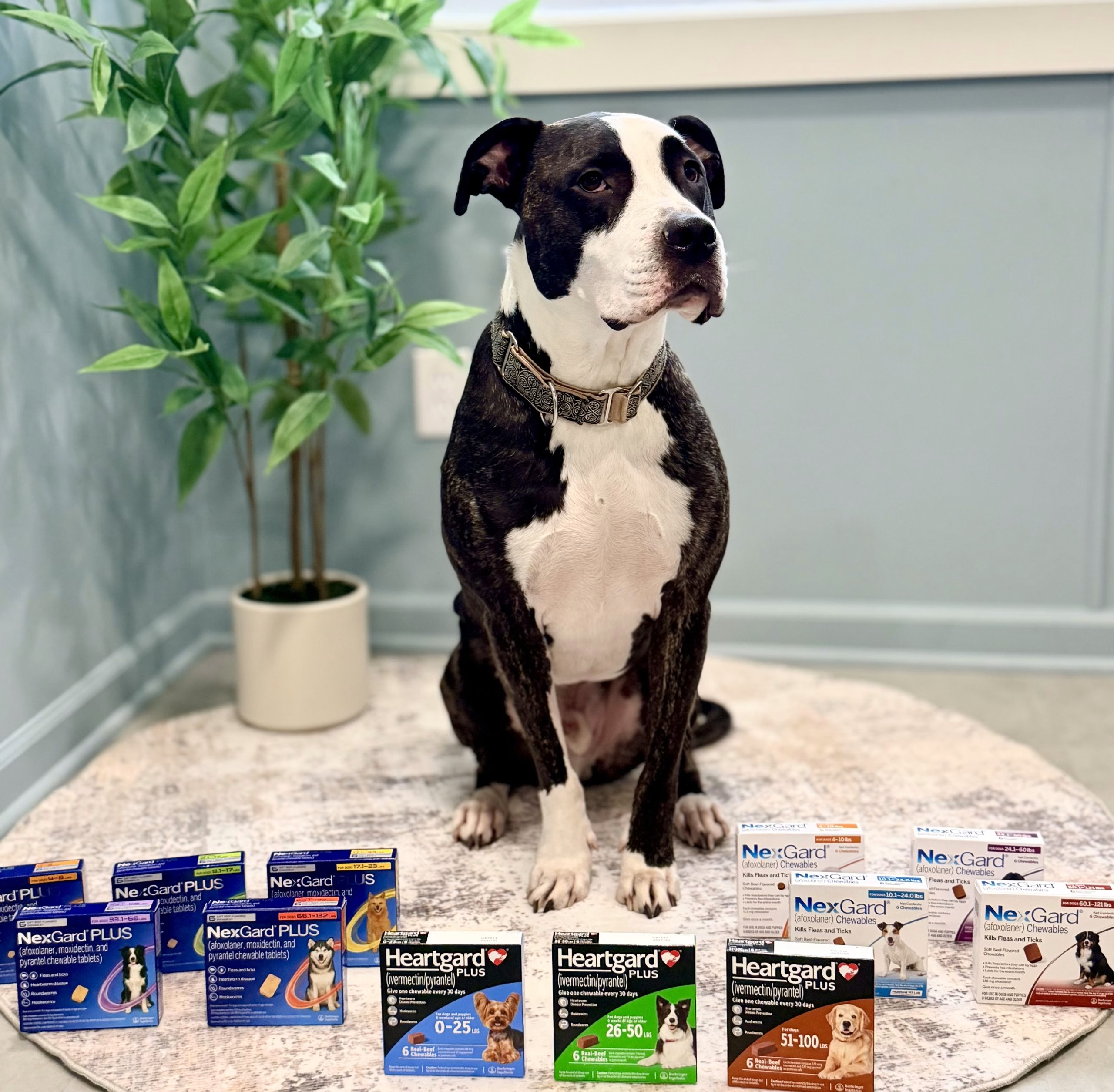
Prevention: Monthly oral or topical heartworm preventives are highly effective when given consistently. Year-round administration is recommended even in the Northeast. Our parasite prevention program and in-house pharmacy provide access to the most effective products with appropriate dosing for your dog’s weight.
Treatment: Heartworm treatment is significantly more complex, costly, and risky than prevention. It involves a series of injections of melarsomine (an arsenic-based compound) administered over several months, with strict exercise restriction throughout — because dying worms can cause fatal pulmonary embolism if physical activity elevates heart rate. Treatment is not available in all cases, particularly for dogs with advanced disease.
This disparity — simple, inexpensive prevention vs. complex, expensive, risky treatment — is the core reason we emphasize consistent year-round heartworm prevention for every dog in our practice. Contact Copake Veterinary Hospital at (518) 329-6161 to schedule heartworm testing and discuss prevention options in Copake Falls, NY .
Frequently Asked Questions About Heartworm Disease in Dogs
Does my dog really need heartworm prevention if we live in New York?
Yes. Heartworm disease is present throughout New York State and the Northeast, and its range continues to expand as climate patterns shift. The American Heartworm Society recommends year-round prevention for all dogs in the continental United States. The risk in the Hudson Valley is real and the consequences of infection are severe.
How often does my dog need heartworm testing?
Annual testing is recommended for all dogs on heartworm prevention. This catches any breakthrough infections (prevention is highly effective but not 100% if a dose is missed or given late), and is required before starting prevention in dogs whose status is unknown.
My dog takes heartworm prevention every month — why does he still need to be tested?
Prevention is highly effective, but no preventive is 100% if a dose is ever delayed or skipped. Annual testing catches rare breakthrough infections and is a requirement for responsible prevention management. It also allows simultaneous tick-borne disease screening, which is equally important in the Hudson Valley.
Can cats get heartworm disease?
Yes — cats are an atypical host for heartworm and the disease manifests very differently. Even a small number of worms in a cat can cause severe respiratory signs and sudden death (heartworm-associated respiratory disease, or HARD). There is no approved treatment for heartworm in cats, making prevention even more critical. We recommend heartworm prevention for cats with any outdoor exposure.
How much does heartworm treatment cost, and how long does it take?
Heartworm treatment typically requires multiple veterinary visits, injectable melarsomine administered in a specific protocol over 2–3 months, pre-treatment stabilization, and strict exercise restriction for the entire treatment period. Costs vary based on the dog’s size and disease severity. It is significantly more expensive than a year of prevention — often by an order of magnitude.
What happens if heartworm disease is left untreated?
Untreated heartworm disease is progressive and ultimately fatal. Adult worms continue to damage the heart and pulmonary vasculature, leading to right-sided heart failure, fluid accumulation, severe exercise intolerance, and eventually death. The timeline varies but advanced disease typically develops over years of infection.
How do I start my dog on heartworm prevention at Copake Veterinary Hospital?
Call Copake Veterinary Hospital at (518) 329-6161 to schedule. We’ll run a heartworm test first, then prescribe the appropriate prevention product for your dog’s weight and lifestyle. Our pharmacy carries the most effective options.